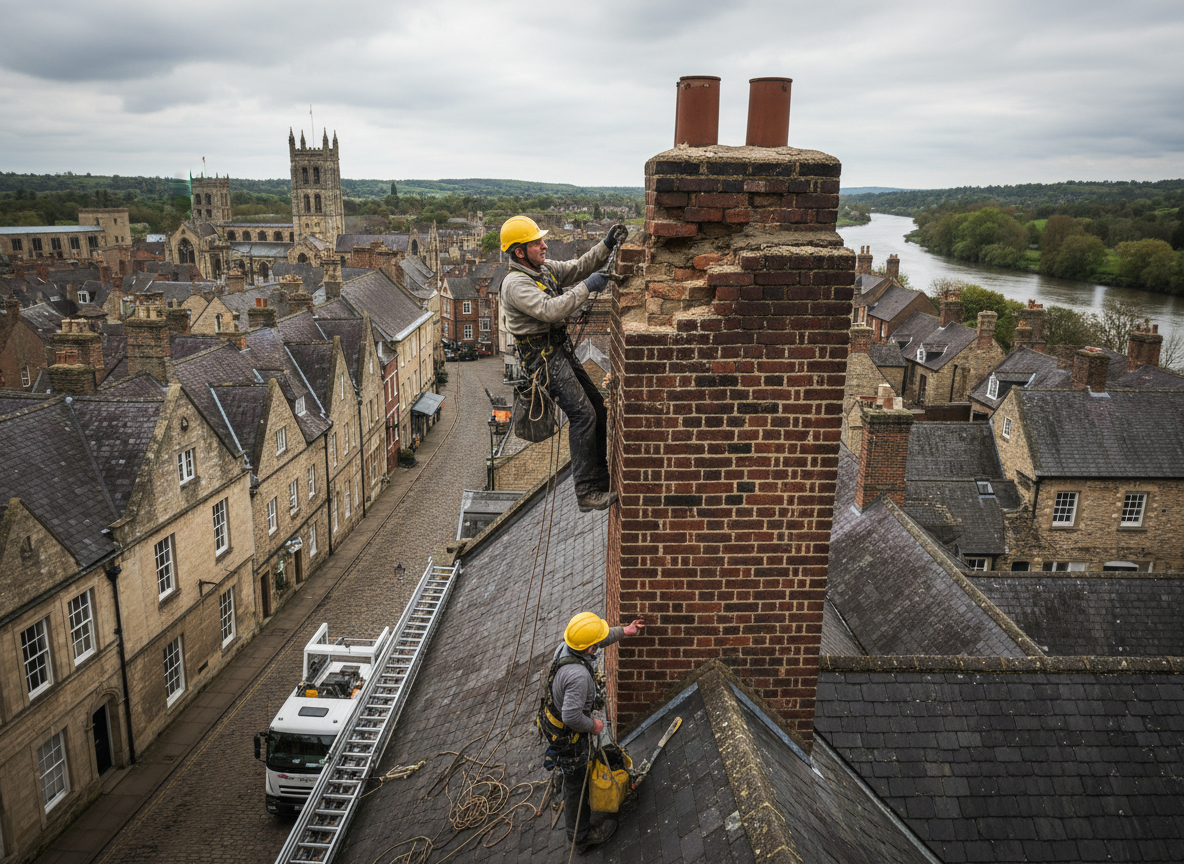
Gloucester City row homes and older single-family houses built before 1960 often have masonry chimneys that have settled unevenly on clay soils common along the Delaware. When heavy rain or freeze-thaw cycles hit, mortar joints open and flue tiles crack, allowing water to reach the firebox or living space. Emergency calls frequently involve active leaks during nor'easters that roll through Camden County. Technicians must first secure the roof edge and install temporary rain caps before daylight work on repointing or tile replacement can begin.
In Gloucester and nearby Westville or Brooklawn, shared chimney stacks between attached homes create extra complications during emergencies. A single blocked flue can affect two households, and any repair must respect the party-wall line without disturbing the neighbor’s side. Crews carry extra flashing and lead wedges sized for the narrow gaps typical of these 1920s–1940s structures. Quick assessment with a mirror and light is used first; if carbon monoxide readings rise, the home is shut down until the flue is cleared or lined.
Storm-driven wind often dislodges clay flue tiles or crown caps on chimneys that serve oil furnaces still common in the Gloucester area. Replacement parts must match the original 8-by-8 or 8-by-12 tile sizes rather than modern round liners. Emergency crews keep a stock of both at the Cumberland Street shop so same-night stabilization is possible before full rebuilds scheduled for drier weather.
Technician insight
In Gloucester the thing that catches most people out with emergency chimney repair is how fast water travels down the shared brick stacks in the pre-war row homes along Cumberland and Market Streets. One cracked crown lets rain reach two fireboxes overnight, and the clay soil under the foundations means the whole stack can shift another quarter-inch before you get the tarp on.
Storm-Damaged Flue in Gloucester City
Heavy rain during a March nor’easter sent water down a cracked flue in a 1940s row home near the Gloucester waterfront. Inspection showed two displaced flue tiles and saturated brick at the second-floor level. Temporary cap and interior protection were installed the same night; permanent tile replacement and repointing were completed once the roof dried.
How it works
- 1
Initial Safety Call
Homeowner describes the issue; CO detector status and visible water or debris are noted while a tech is dispatched from Gloucester City.
- 2
On-Site Assessment
Exterior and interior inspection of the chimney, roof edge, and firebox; moisture meter readings and basic draft check performed.
- 3
Temporary Containment
Loose debris removed, temporary cap or tarp installed, and any active leak path sealed to protect the interior until permanent repair.
- 4
Permanent Fix Scheduling
Detailed scope and timeline given for full repointing, flue lining, or crown rebuild once weather allows safe access.
Pricing
Upfront quotes provided after assessment; emergency rates reflect after-hours and roof work.