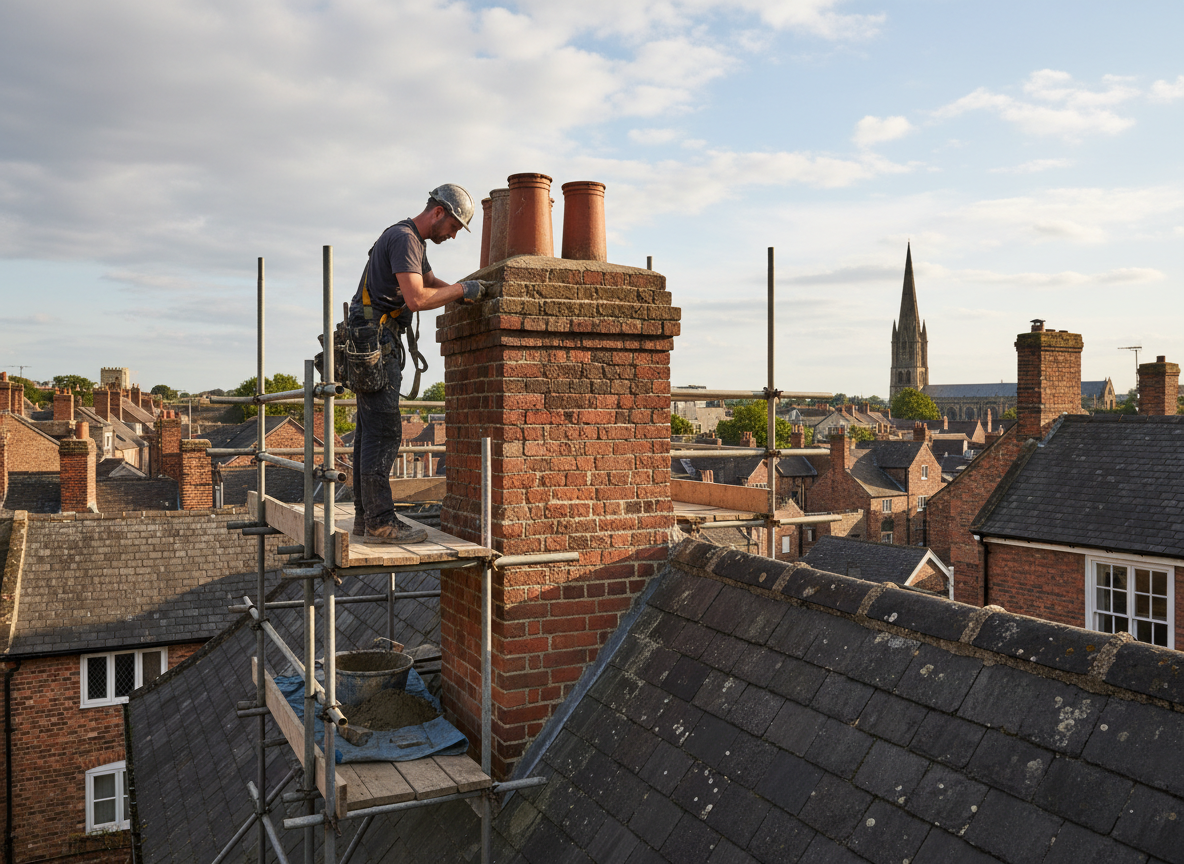
Gloucester City sits along the Delaware River where older brick and masonry homes from the early 1900s dominate many blocks. These chimneys often feature original clay liners and lime mortar that has seen repeated freeze-thaw cycles from river-influenced winters. Moisture seeps through hairline cracks in the crown or flue, then expands when temperatures drop, pushing bricks outward or eroding mortar joints from the inside out.
Homeowners in neighborhoods around Highland Park or along Cumberland Street frequently call after noticing white staining on interior walls or missing draft during cold snaps. We check for spalling bricks, rusted flue caps, and water tracking along the smoke chamber that standard visual checks miss. Repair work here usually involves targeted tuckpointing or crown rebuilding rather than full demolition because the surrounding masonry remains sound.
Camden County building practices in these older stock homes mean chimneys often share walls with neighbors, so any repair must respect party-wall rules and avoid disturbing adjacent flues. We also watch for soil settlement along the riverbank lots that tilts chimneys slightly over decades, creating stress points that only appear once we remove the cap.
Seasonal rain combined with salt air accelerates deterioration on south-facing chimneys exposed to prevailing winds off the water. Homeowners who wait until winter often find the job expands once we open the chase and discover hidden water damage that started the previous spring.
Technician insight
In Gloucester, the thing that catches most people out with chimney repair near me is how Delaware River humidity and freeze-thaw cycles crack mortar in the chimneys on 1920s row homes along Cumberland Street and nearby blocks long before any visible exterior damage shows up.
Water Tracking in Gloucester City Chimney
Homeowner reported damp smell and ceiling stains after spring rains. Inspection revealed failed crown allowing water to run down the flue and exit at a cracked smoke chamber joint. We rebuilt the crown, repointed the affected joints, and added proper flashing. Draft returned to normal and no further moisture entered the home.
How it works
- 1
Site Inspection
We examine the chimney exterior, flue, crown, and damper from the roof and interior to identify active water paths and structural movement.
- 2
Diagnosis and Quote
Findings are documented with photos and explained on site so the homeowner sees exactly which joints, bricks, or liner sections require work before any pricing is discussed.
- 3
Targeted Repair
Mortar is cut out and repointed, crowns rebuilt with proper slope and flashing, and damaged flue sections addressed while preserving the original masonry where possible.
- 4
Final Check and Cleanup
The chimney is tested for draft and water resistance, debris removed from the property, and the homeowner walks through the completed work.
Pricing
Upfront quotes provided after inspection; final price depends on extent of mortar loss and whether liner sections must be addressed.