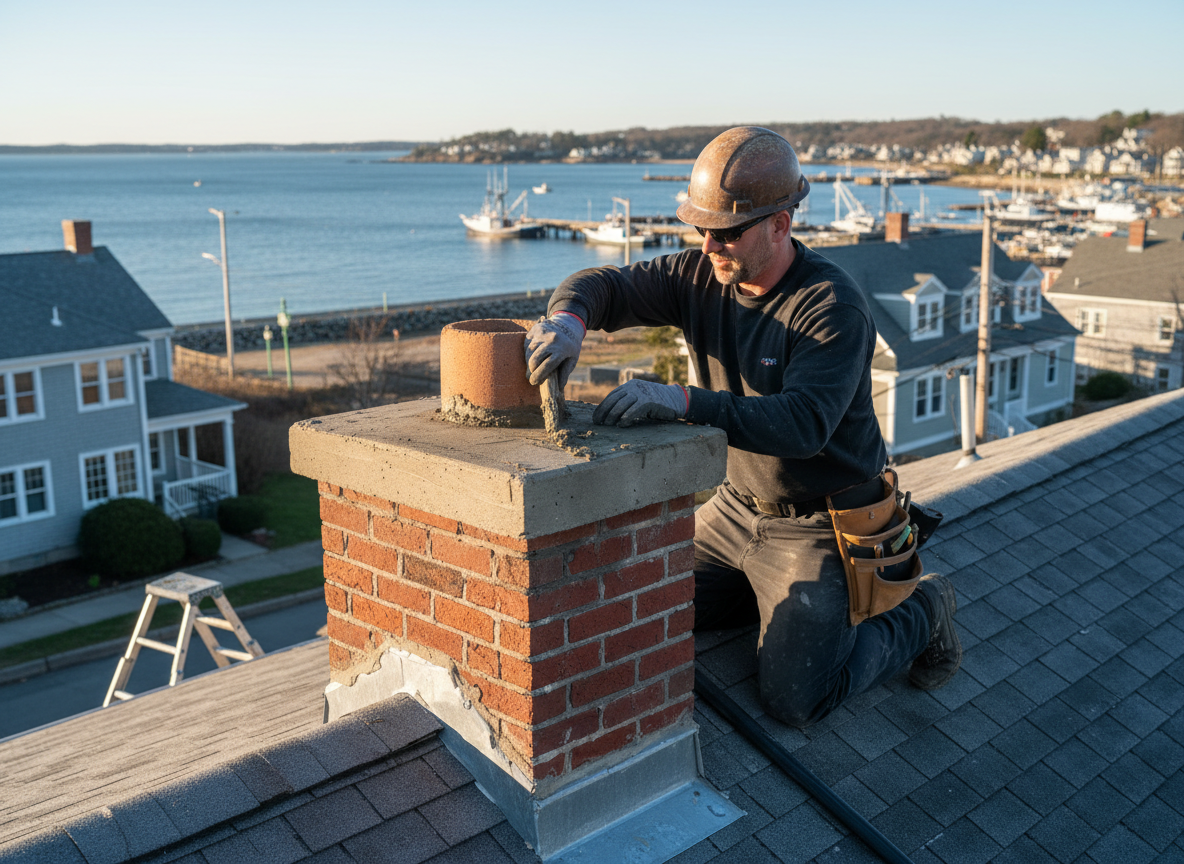
Chimney crowns in Gloucester City take constant abuse from the Delaware River humidity and repeated freeze-thaw cycles. Older brick row homes and two-story colonials built between 1920 and 1960 often have original concrete crowns that have spalled or developed hairline cracks. Water enters these fissures, freezes, and widens them until the crown separates from the flue tile. Once that happens, moisture travels down the flue or behind the brick, staining ceilings and rotting attic framing. We remove the damaged concrete, clean the top course of brick, and pour a new crown with a proper overhang and drip edge so water sheds away from the chimney walls.
Many Gloucester homeowners try to patch cracks with caulk or roof cement. Those materials fail within one winter because they cannot handle the expansion that occurs when trapped moisture freezes. We always check the flashing where the crown meets the flue and the condition of the top few courses of brick. If the brick has begun to powder or the flue tile is loose, we address those issues in the same visit rather than leaving the crown sitting on a weak base. The work is done from the roof, so we protect surrounding shingles and gutters during removal and pouring.
Seasonal Timing
Schedule crown work in Gloucester before the first hard freeze. Once temperatures drop below freezing at night, any remaining moisture in an unrepaired crown will expand and accelerate damage. Early fall repairs also give the new concrete time to cure before heavy winter rains arrive.
Common Edge Cases
Homes near the waterfront often have higher salt content in the air that speeds spalling. We use a slightly richer concrete mix and add a latex bonding agent when working on these properties to improve long-term durability against the local conditions.
Technician insight
In Gloucester, the thing that catches most people out with chimney crown repair is how the river humidity plus freeze-thaw cycles destroy crowns on pre-1950 brick homes faster than in drier inland towns. Homeowners patch with caulk and think they are done, but the moisture is already behind the brick.
Crown Failure on Gloucester City Row Home
Water stains appeared on the second-floor ceiling after a week of cold rain. Inspection showed a cracked crown on a 1940s brick chimney with water running down the flue. We removed the old crown, repaired the top brick course, and installed a new concrete crown with proper overhang. The attic stayed dry through the next several storms.
How it works
- 1
Roof Access and Safety Setup
We secure ladders and roof protection at the Gloucester address and inspect the crown from above.
- 2
Damage Assessment
We check for cracks, separation from brick, loose flue tile, and flashing condition.
- 3
Old Crown Removal
Damaged concrete is cut out and debris is lowered safely without scattering on shingles.
- 4
New Crown Installation
A reinforced concrete crown with overhang and drip edge is formed and poured in one pour.
- 5
Final Cure and Leak Check
After curing we run water over the crown and confirm no moisture enters the flue or attic.
Pricing
Pricing varies by crown size, extent of brick damage, and roof pitch access.