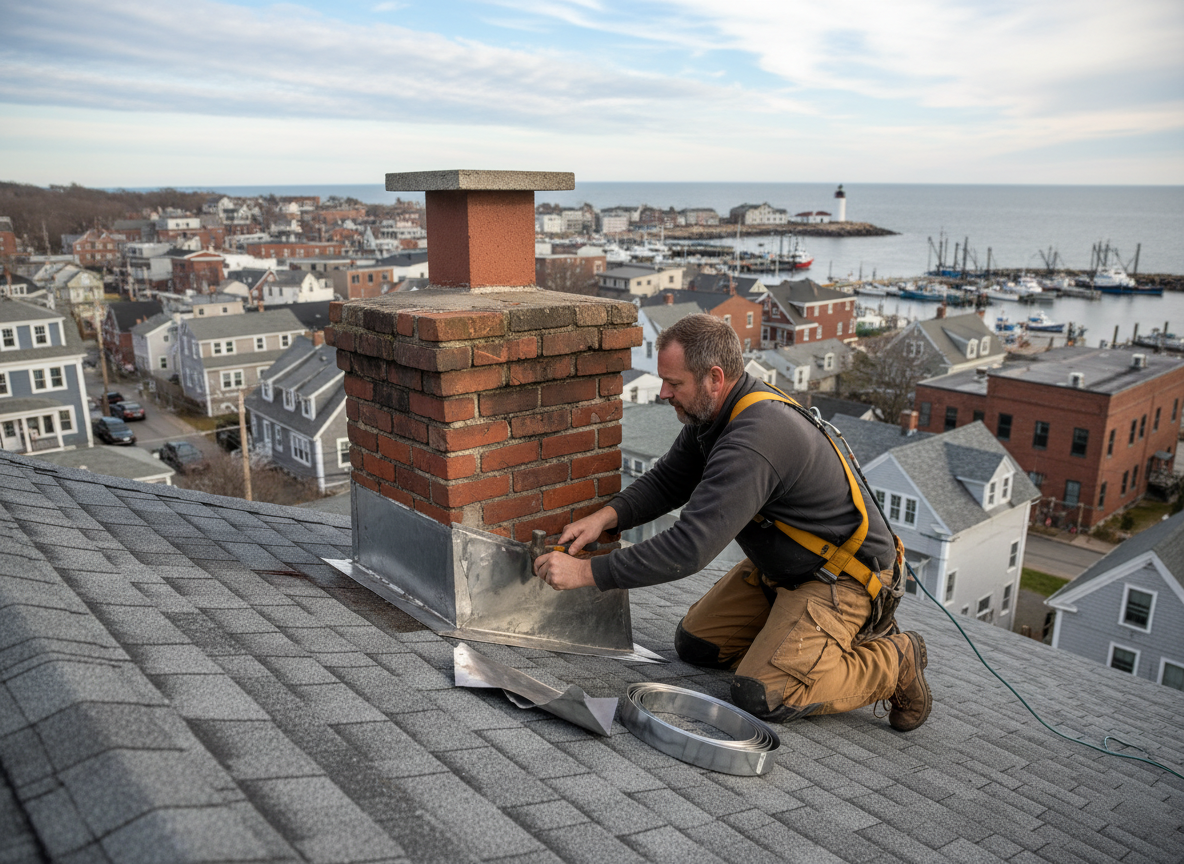
Chimney flashing sits at the intersection of masonry and roofing, and in Gloucester City homes built before the 1950s the original lead or copper often fails where it meets the stepped brickwork. Water enters at the corners first because freeze-thaw cycles along the Delaware River expand small gaps until mortar and flashing separate. Proper repair requires removing the first course of bricks, installing new step flashing that ties into existing shingles, and re-pointing with a lime-based mortar that matches the softer original brick.
Many Gloucester row homes have chimneys that lean slightly because the shallow foundations sit on fill soil near the river. When flashing is replaced, the new metal must extend higher on the uphill side to account for that lean, otherwise runoff still finds a path behind the counter flashing. We always pull a few shingles to inspect the cricket or saddle behind the chimney, because missing cricket flashing is the hidden cause of leaks reported after heavy nor'easters.
Code in Camden County requires flashing to be installed with a minimum 4-inch overlap onto the roof plane and counter flashing let into a reglet cut in the masonry. Skipping the reglet and relying only on caulk is the most common shortcut that fails within two seasons here. We cut the reglet, install the metal, and seal with a compatible masonry caulk rated for the temperature swings between river humidity and winter lows.
Seasonal Timing
Flashings installed in late fall stand a better chance of curing before winter storms hit Gloucester. Spring repairs often follow ice-dam events that push water under the old metal, so we schedule those jobs after the ground firms up to avoid compacting lawns around the house.
Technician insight
In Gloucester, the thing that catches most people out with chimney flashing repair is how many pre-war row homes have chimneys that settled toward the alley side because the soil along the Delaware is fill. That lean means standard flashing heights fail on the low side and you have to extend the metal an extra course or the leak returns the first hard rain.
Flashing Failure on Gloucester City Row Home
Homeowner reported water stains on the second-floor ceiling after a spring storm. We found the original lead flashing had pulled away on the downhill side where the chimney leaned. After removing the damaged metal and cutting a new reglet, we installed copper step flashing and repointed the brick. No further leaks appeared after the next heavy rain.
How it works
- 1
Site Inspection
Check flashing condition, brick lean, cricket presence, and roof tie-in points from the 523 Cumberland St base.
- 2
Material Removal
Take out damaged flashing and loose mortar without disturbing sound shingles or brick.
- 3
New Flashing Install
Cut reglet, set step and counter flashing with proper overlaps, and tie into existing roofing.
- 4
Masonry Restoration
Repoint joints with compatible mortar and verify water runoff direction on the Gloucester City roof pitch.
- 5
Final Check
Water test and document the repair for the homeowner before leaving the job.
Pricing
Upfront quotes after on-site inspection; price moves with chimney height, number of sides needing work, and whether a cricket must be rebuilt.