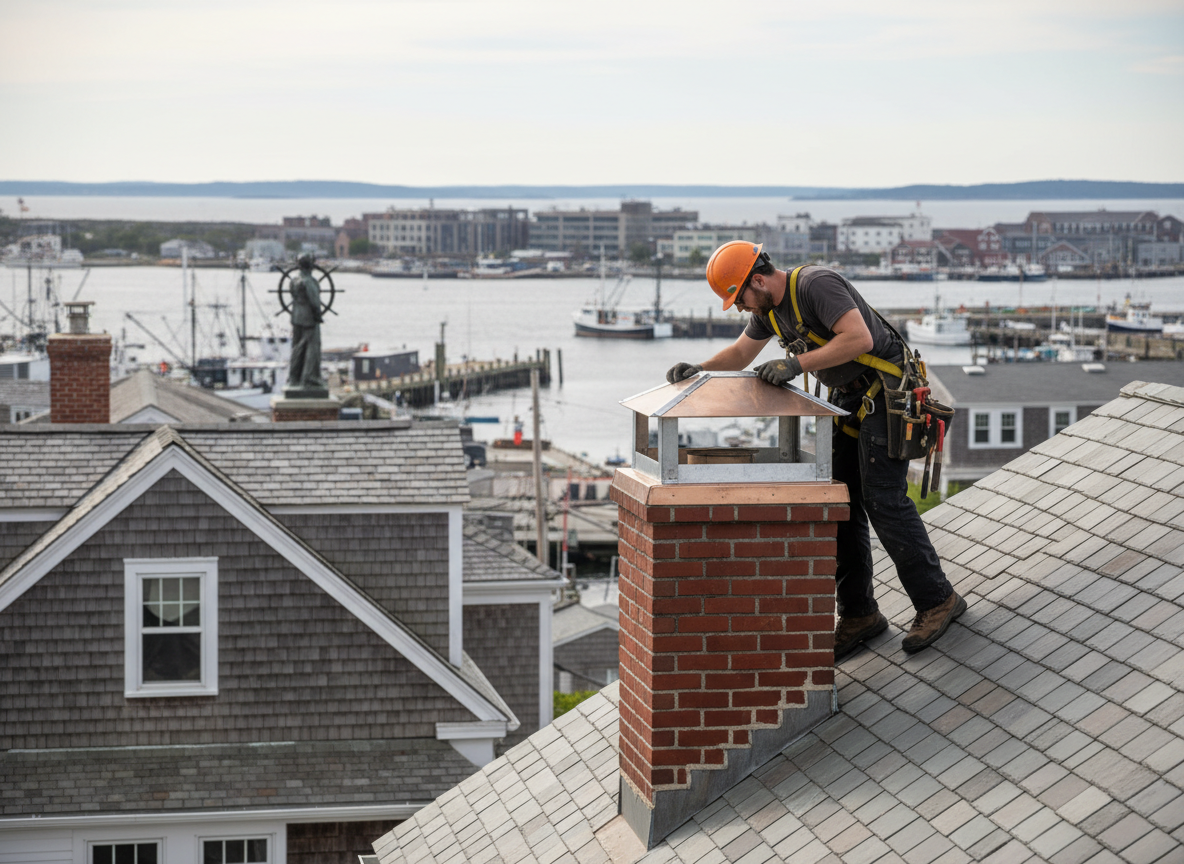
Gloucester City homes built before 1950 often feature single-wall brick chimneys that suffer from freeze-thaw cycles common along the Delaware River. A properly fitted stainless steel or copper cap blocks rain and snow while allowing exhaust to escape, reducing creosote buildup inside flues that serve wood stoves and oil furnaces still common in the neighborhood. Edge cases include caps on shared chimneys between row homes on Cumberland Street, where alignment must avoid blocking a neighbor’s flue.
Installation requires checking for spalling brick and deteriorated mortar joints first, because a new cap on an unstable crown will fail within one winter. In Gloucester’s flat terrain, wind-driven rain from nor’easters hits chimneys at low angles, so we use caps with extended overhangs and mesh sized to keep out local starlings and squirrels. Code requires the cap to sit at least three inches above the flue and be secured with stainless screws, not caulk alone.
Homeowners sometimes install universal caps from big-box stores that do not match flue dimensions, allowing water to pool on the crown and freeze. We measure each flue on site and fabricate or select a custom fit, then seal the crown with a breathable masonry coating rated for New Jersey winters. This step prevents the hidden rot that appears as brown stains on second-floor ceilings after spring thaw.
Seasonal Considerations
Winter installations in Gloucester require working around ice on roofs and ensuring the cap’s spark arrestor remains clear of snow load. Spring jobs focus on post-thaw inspections where missing caps have allowed water to saturate flue tile joints.
Technician insight
In Gloucester, the thing that catches most people out with chimney cap installation is older row homes on streets like Cumberland where two flues share one chimney stack; a cap that fits one side often restricts the other, and the freeze-thaw cycles off the river push water straight through any gap in the crown within the first winter.
Missing Cap on a 1920s Brick Chimney
A Gloucester City homeowner noticed water stains on an upstairs ceiling after heavy March rain. We found the original cap had rusted away on a two-flue chimney serving both the oil furnace and a wood stove. We installed a custom stainless cap with proper overhang and sealed the crown, stopping further water entry into the flue joints.
How it works
- 1
Site Assessment
Measure flue openings, inspect crown condition, and note roof access at the Gloucester City address.
- 2
Material Selection
Choose stainless or copper cap sized to the flue and matched to existing chimney height and wind exposure.
- 3
Preparation
Clean the crown, repair minor mortar cracks, and confirm no shared-flue conflicts with neighboring homes.
- 4
Installation
Secure the cap with stainless hardware, apply breathable sealant, and test draft with the homeowner’s heating appliance.
- 5
Final Check
Verify clearance above the flue, confirm mesh is secure, and document the completed work for the property file.
Pricing
Cost depends on chimney height, flue size, roof access, and material choice; we provide an upfront quote after the site visit.