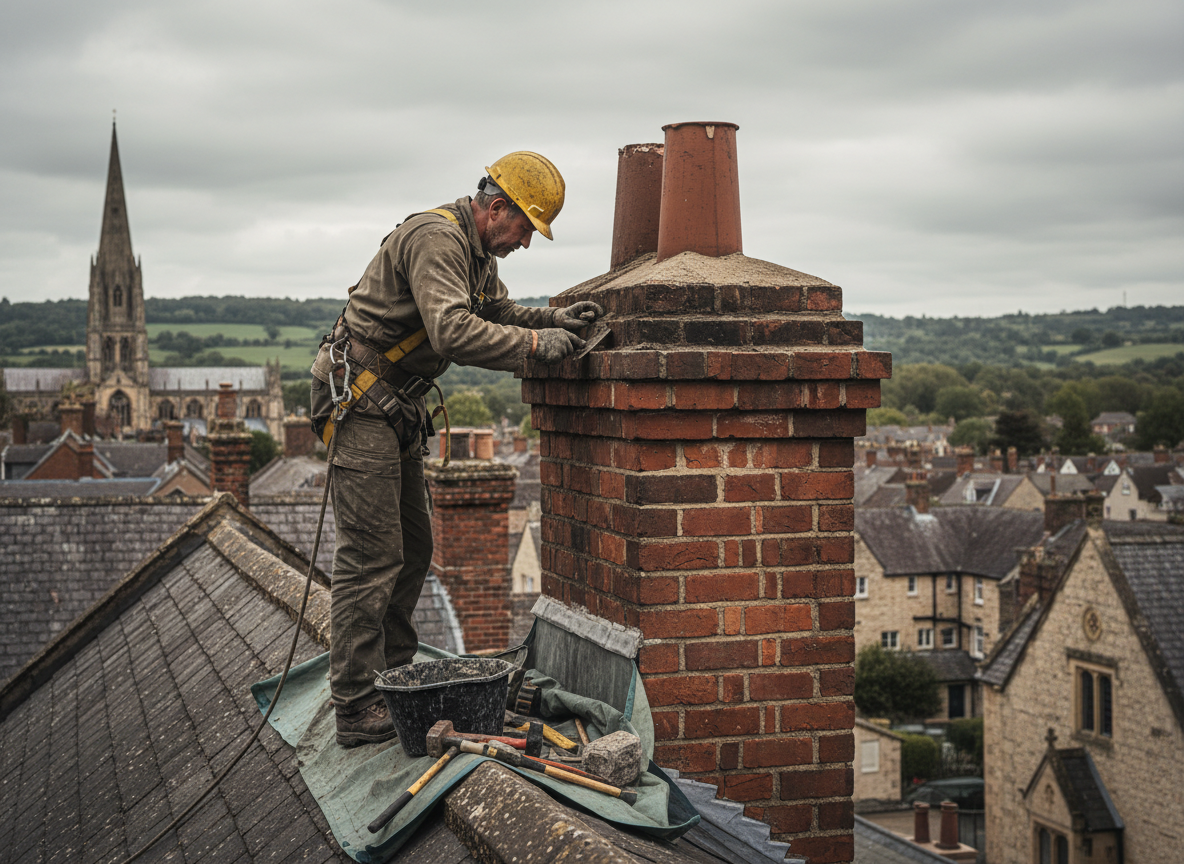
Gloucester City sits along the Delaware River in Camden County where many homes date to the early 1900s with original brick chimneys. These structures face repeated freeze-thaw cycles each winter plus heavy moisture from river humidity that works into mortar joints and flue tiles. Over time this creates spalling bricks, loose crowns, and hairline cracks that allow water to reach interior walls. A repair that ignores the river-driven moisture cycle often fails within two seasons.
Repair work here usually starts with a top-down inspection because many Gloucester chimneys were built with single-wall clay flue liners that no longer meet current clearance rules. When we find deteriorated mortar or cracked tiles we remove the damaged sections, install stainless-steel liners where needed, and repoint with Type N mortar formulated for the local freeze exposure. Homeowners in neighborhoods near Broadway and Klemm Avenue frequently discover that their chimneys share walls with adjacent row homes, which changes how we scaffold and contain debris.
We also see frequent issues where roof flashing was never integrated properly with the chimney base during later re-roofing jobs. Water enters at that junction and travels down the flue exterior, rotting rafters. Fixing only the visible crown while leaving the flashing untouched guarantees callbacks. Every repair includes checking the cleanout door seal and verifying draft after the fix because many Gloucester homes still rely on these chimneys for gas inserts or wood stoves.
Because service runs 24/7 from our base at 523 Cumberland Street, we can respond the same day when heavy rain follows a freeze and homeowners notice interior staining. The goal is always to restore the chimney to a watertight, code-compliant state without replacing the entire stack unless structural movement from the clay soils near the river has shifted the foundation.
Technician insight
In Gloucester the thing that catches most people out with chimney repair is how the Delaware River humidity plus winter freeze-thaw cycles destroy mortar in the older brick stacks near the waterfront faster than in inland Camden County neighborhoods.
Broadway Row Home Flue Leak
Water staining appeared on the second-floor ceiling after a January thaw. Inspection from the roof showed a cracked crown and failed flashing on a 1910 brick chimney shared with the neighboring house. We removed the damaged crown, installed a new precast cap, re-flashed the base, and lined the flue with stainless steel. The interior staining stopped and the homeowner resumed using the wood stove without further leaks.
How it works
- 1
Site Inspection
We examine the crown, flue, and flashing from roof level and interior cleanout, noting any shared-wall conditions common in Gloucester row homes.
- 2
Diagnosis And Quote
Findings are explained on site with photos; an upfront price is given before any work begins.
- 3
Repair Execution
Damaged mortar, tiles, or flashing are replaced using materials suited to Camden County freeze-thaw exposure and river humidity.
- 4
Final Check And Cleanup
Draft is tested, debris is removed, and the homeowner receives a written summary of what was addressed.
Pricing
Upfront quotes provided after inspection; price varies with chimney height, liner condition, and access constraints typical of Gloucester City row homes.